

Table of Contents
- What Makes a Psychological Thriller Twist Land
- Psychological Thrillers With Unreliable Narrators
- Psychological Thriller Tropes That Still Work
- Best Domestic Thrillers With Twists
- Slow-Burn vs. Fast-Paced: Matching the Book to Your Mood
- Where to Find Your Next Psychological Thriller Read
- Frequently Asked Questions
Last Updated: September 29, 2026
What Makes a Psychological Thriller Twist Land
A great twist makes you reread the last fifty pages to see what you missed. The best psychological thrillers with plot twists work because the author plants clues you dismissed as harmless, then reveals they meant something else entirely.
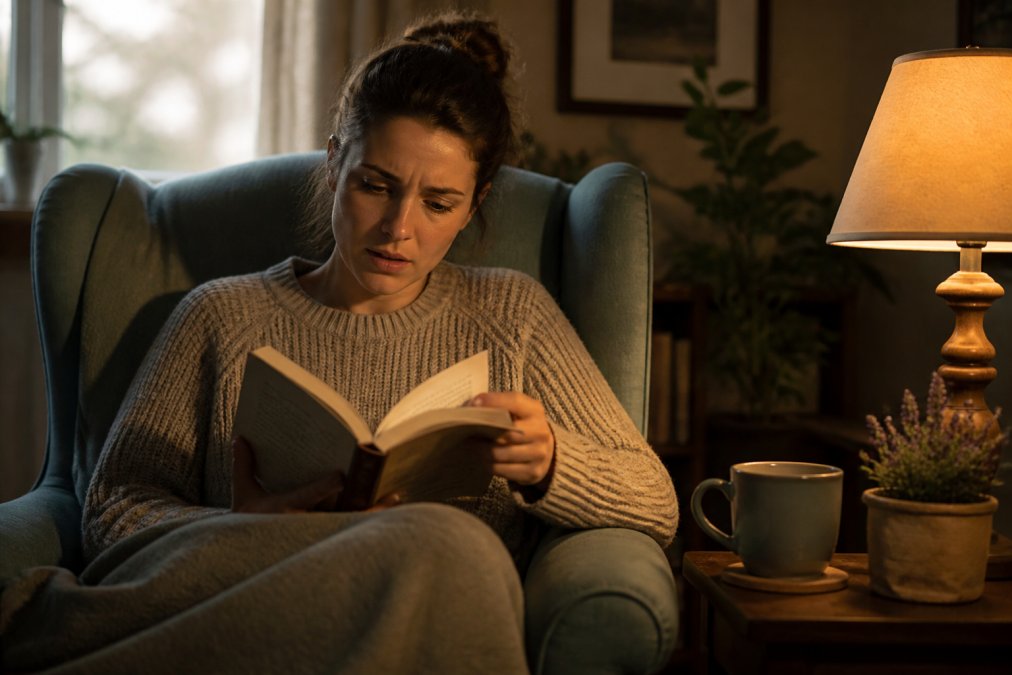
The Psychology Behind a Great Twist
Great twists work on dramatic irony and narrative structure. The author gives you information that means one thing at first, then something darker later. You trusted the wrong details.
Three things make a twist land:
- Fair play. The clues were there all along. You just missed them.
- Emotional weight. The reveal changes how you feel about a character, not just what you know.
- No cheat. The author doesn't hide a fact from you, they just frame it differently.
Spoiler-Free vs. Spoiler-Heavy: How to Read This Guide
This guide is spoiler-free in the recommendations: we name titles and themes, never endings. The one exception is the tropes section, where we discuss patterns across many books, but even there, no specific ending gets revealed.
Here's how to use this guide:
- Spoiler-free reader: Start with the unreliable narrator and domestic thriller sections. Pick by mood.
- Spoiler-tolerant reader: The tropes section will sharpen your eye for what's coming.
- Book club picker: Jump to the mood-matching table near the end.
Psychological Thrillers With Unreliable Narrators
An unreliable narrator is a storyteller whose version of events can't be trusted, they might lie, misremember, or believe something untrue. This is the engine behind many of the best psychological thrillers with plot twists, and readers love it because it mirrors real life: we all edit our own stories.
Memory Manipulation and Identity Crisis
Memory is fragile. A narrator who can't trust their own recall creates a special kind of dread: you're not just solving a mystery, you're questioning whether one even happened. That drives an identity crisis in the reader too, if the narrator is wrong about the past, who are they really?
Books in this vein often use:
- Fragmented timelines that jump between past and present
- Diary entries or letters that contradict the main story
- A character who insists on one version while evidence points elsewhere
Gaslighting and Paranoia in Modern Suspense
Gaslighting is when someone makes another person doubt their own reality. In a thriller it's a weapon; in modern suspense it's often the whole plot. The result is paranoia you can feel on the page, you suspect every character, including the narrator.
Psychological Thriller Tropes That Still Work
Not every trope is tired. The difference between one that feels fresh and one that feels like a cheat is whether the author uses it to explore a real psychological mechanism, not just to withhold information. Below are some tropes that still land, with named examples.
| Trope | Why It Works (Psychological Mechanism) | Named Example | Watch For |
|---|---|---|---|
| Unreliable narrator | Exploits confirmation bias, you believe the narrator because you want to | Gone Girl by Gillian Flynn; The Girl on the Train by Paula Hawkins | Clues planted early, revealed late |
| The isolated setting | Triggers sensory deprivation and claustrophobia, narrowing your focus | Shutter Island by Dennis Lehane; The Sanatorium by Sarah Pearse | Fewer suspects, higher stakes |
| The missing memory | Creates cognitive dissonance, you and the narrator both need the gap filled | Before I Go to Sleep by S.J. Watson; The House of Memories by Monica McInerney | Fragments that slowly connect |
| The perfect facade | Leverages dramatic irony, you sense the cracks before the characters do | The Stepford Wives by Ira Levin; The Perfect Nanny by Leïla Slimani | Small cracks in the story |
| The cat-and-mouse chase | Activates mirror neurons, you mentally simulate both predator and prey | The Silence of the Lambs by Thomas Harris; You by Caroline Kepnes | A worthy opponent, not a straw man |
Why the Cat-and-Mouse Still Works
The cat-and-mouse structure endures because it is character-driven: you're watching two minds outthink each other. In The Silence of the Lambs, Hannibal Lecter isn't a monster who hides, he's a psychologist who studies Clarice as much as she studies him.
The Slow-Burn Trope
Slow-burn tropes build psychological tension over hundreds of pages by making you sit in discomfort. The payoff feels earned because you've invested in the characters' interior lives: a fast-paced thriller surprises you in a paragraph, but a slow-burn thriller recontextualizes everything you thought you knew about a person.
Spoiler-Tagged Deep Dive: The Unreliable Narrator in Gone Girl
Best Domestic Thrillers With Twists
Domestic thrillers set the danger inside the home. The threat isn't a stranger, it's a spouse, a stepchild, a neighbor. That's what makes them unsettling: you can't lock the door on someone who already has a key.
- A marriage or family under quiet strain
- A secret that's been buried for years
- A reveal that reframes a relationship you thought you understood
Slow-Burn vs. Fast-Paced: Matching the Book to Your Mood
Not every reader wants the same experience. Some want slow, creeping dread; others want a visceral ride with a twist every fifty pages. Match the book to your mood and you'll enjoy it more.
| Your Mood | Best Fit | What to Expect |
|---|---|---|
| Want to savor the tension | Slow-burn thriller | Deep character work, late payoff |
| Need a quick escape | Fast-paced thriller | Short chapters, constant turns |
| Crave a brain-teaser | Puzzle-driven thriller | Clues, structure, fair-play twist |
| Want an emotional gut-punch | Domestic suspense | Family secrets, moral weight |
Where to Find Your Next Psychological Thriller Read
Finding the right book comes down to a trusted source, a clear theme, and an easy way to sample before you buy. But the biggest gap in most "best psychological thrillers" lists is availability, they tell you what to read but not where to find it.
Where to Watch (and Read) the Most-Twisted Thrillers
Most static lists ignore streaming availability. Here's a snapshot for a few titles that consistently appear on "best twist" lists. Availability changes frequently, so treat this as a starting point and check your local library apps (Libby, Hoopla) for free digital loans.
| Title | Where to Watch (Streaming) | Where to Read (Digital/Physical) |
|---|---|---|
| Gone Girl | Available on major rental platforms; check Max | Libby, Hoopla, local library, all major bookstores |
| Shutter Island | Available on Paramount+; rental on Prime Video | Libby, Hoopla, local library |
| The Girl on the Train | Rental on Prime Video, Apple TV | Libby, Hoopla, local library |
| Before I Go to Sleep | Rental on Prime Video, Apple TV | Libby, Hoopla, local library |
| The Silence of the Lambs | Available on Max; rental on Prime Video | Libby, Hoopla, local library |
How to Choose Based on Your Mood (and Your Time)
Not every reader wants the same experience. Some want slow, creeping dread; others want a visceral ride with a twist every fifty pages. Match the book to your mood and you'll enjoy it more.
| Your Mood | Best Fit | What to Expect | Named Example |
|---|---|---|---|
| Want to savor the tension | Slow-burn thriller | Deep character work, late payoff | The Secret History by Donna Tartt |
| Need a quick escape | Fast-paced thriller | Short chapters, constant turns | The Chain by Adrian McKinty |
| Crave a brain-teaser | Puzzle-driven thriller | Clues, structure, fair-play twist | The Seven Deaths of Evelyn Hardcastle by Stuart Turton |
| Want an emotional gut-punch | Domestic suspense | Family secrets, moral weight | Little Fires Everywhere by Celeste Ng |
A Simple Decision Tree
- New to the genre? Start with a domestic thriller. The familiar setting makes the tension easier to feel. Try The Girl on the Train.
- Read a lot of thrillers? Try an unreliable narrator book. The puzzle is the appeal. Try Gone Girl or The Last House on Needless Street by Catriona Ward.
- In a book club? Pick something with moral ambiguity. It sparks better discussion. Try The Push by Ashley Audrain.
- Short on time? Pick a fast-paced thriller under 350 pages. Try The Chain.
Supporting Independent Publishers
If you want to branch out beyond the bestseller lists, independent publishers often curate more tightly than big-box shelves. Jove Publishing is a family-owned independent publisher based in North Carolina, and its thriller catalog, including Paige Brooks's The Stepmother and She Told Me to Lie, focuses on the unpredictable, character-driven suspense this guide covers. You can also find epic fantasy and activity books from Misty Clover Press under the same roof.
Frequently Asked Questions
What makes a psychological thriller effective?
A psychological thriller works when tension builds from character and perception, not just action. Unreliable narrators, memory gaps, and gaslighting keep readers unsure what is real. Pacing matters too: a slow-burn first half makes the climax hit harder. The best psychological thrillers with plot twists also earn their reveal through clues planted early, so the ending feels inevitable rather than cheap.
Are there psychological thrillers that are impossible to predict?
No book is truly impossible to predict, but some come close. Thrillers that use unreliable narrators, dual timelines, or reality-bending elements make guessing harder because the clues themselves may be false. Paige Brooks's She Told Me to Lie is a good example of a story where the reader's assumptions keep shifting. The fun is not solving it early; it is realizing you were reading the wrong story all along.
What are some must-read psychological thrillers for fans of domestic suspense?
For domestic suspense, look for books built on marriage, family secrets, and betrayal. Paige Brooks writes in this space with titles like The Stepmother, The Apartment Sitter, and Her Husband Now. These are best domestic thrillers with twists because the danger lives inside the house, not outside it. If you like claustrophobic settings and character-driven dread, start there.
How do psychological thriller tropes differ from horror tropes?
Psychological thriller tropes focus on the mind: unreliable narrators, gaslighting, obsession, and memory manipulation. Horror tropes lean on external threats like monsters, gore, or the supernatural. A thriller can be terrifying without a single jump scare because the fear comes from not trusting the narrator or the people around them. If you want suspense that stays grounded in real human behavior, psychological thrillers are the better fit.
The hardest part of a psychological thriller is trusting the wrong person for 300 pages. Jove Publishing curates thrillers built around that exact tension, with Paige Brooks's domestic suspense leading the way. Browse titles like The Stepmother and Her Husband Now, or explore the full thriller collection to find your next twist. Continue shopping at Jove Publishing and pick the book that matches your mood.